
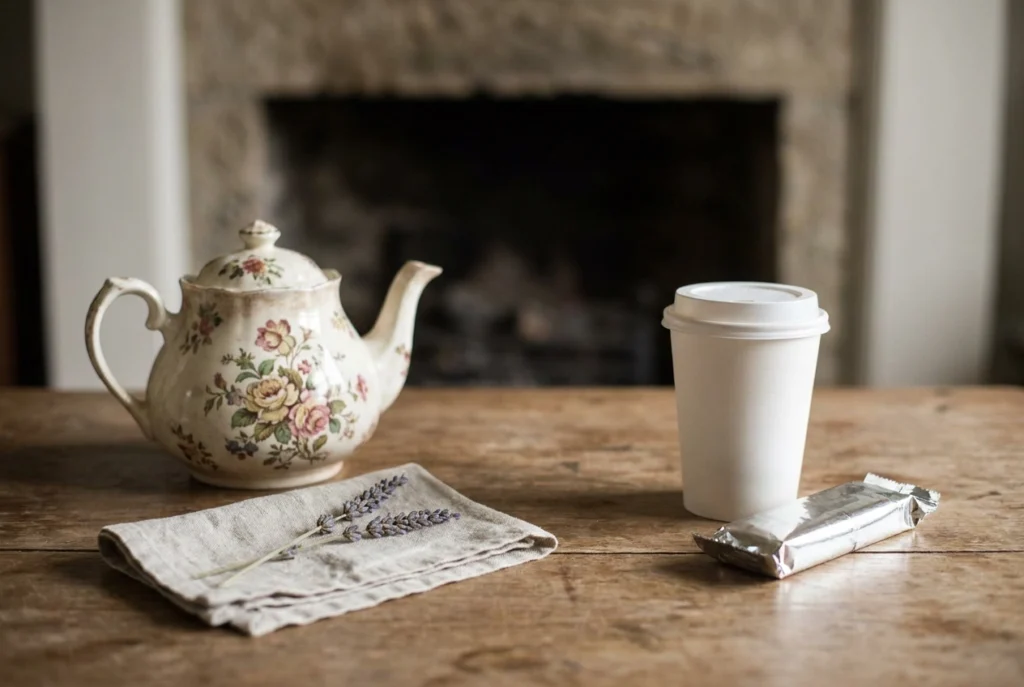
You booked a hotel for your last trip. It was fine. Clean room, decent Wi-Fi, a coffee station in the lobby. But somewhere between checking in at a front desk and eating a wrapped muffin alone at 7 a.m., something felt a little… flat.
If you are planning a trip to Lambertville and wondering whether a Lambertville bed and breakfast might be worth considering over a standard hotel, you are asking exactly the right question. The honest answer is that these two options are not just different price points or aesthetics. They are fundamentally different experiences, and choosing the wrong one for your trip can leave you feeling like you missed the point entirely.
This guide breaks down what actually separates a historic estate inn from a typical hotel stay. You will learn what a B&B really is, what to expect at the breakfast table, how innkeeper hospitality differs from a hotel concierge, and who each option genuinely suits best. By the end, you will have a clear picture of which type of stay fits the trip you actually want to take.
The Moment Most Travelers Get It Wrong
Most travelers planning a trip to Lambertville open a booking site, filter by dates and price, and click on a familiar hotel brand. It takes about 90 seconds. It also skips over something worth knowing.
The bed and breakfast category carries a lot of outdated baggage. Many people picture a creaky Victorian townhouse, thin walls, and a shared bathroom down the hall. That mental image has almost nothing to do with a resort-style estate on 8.5 private acres. Those are two categorically different things, and confusing them is where most booking decisions go sideways.
Lambertville makes this matter more than it would somewhere else. The town sits where the Delaware River, the New Hope arts scene, and a deeply rooted river town culture all converge. It’s the kind of place where a weekend trip from New York or Philadelphia can genuinely feel restorative, precisely because the experience of being there compounds with each hour you slow down. Your lodging either supports that or works against it.
This guide makes one central argument: a hotel and a historic estate inn are not different price points for the same product. They are different hospitality models entirely. Understanding that before you book means arriving with the right expectations, the right plan, and the right person beside you.
What a Bed and Breakfast Actually Is (and Is Not)
Start here: the name tells you the basics. A bed and breakfast provides a bed and a meal, and it is owner-operated, meaning the person who greets you often owns the property. Guests stay in individually decorated rooms rather than standardized units, and breakfast is included in the rate. But those two features are really just the entry point.
Where a B&B diverges from a hotel is in its underlying philosophy. Hotels are built for scale, with tens of thousands of properties and millions of rooms designed around consistency, speed, and replication. A bed and breakfast is built around the opposite: intentional pacing, a personal welcome, and an environment that was curated rather than manufactured.
Within the B&B category, there is an important distinction worth knowing before you book. A typical B&B might be a converted historic home with four or five rooms. An estate inn is a different scale entirely. Properties in this subcategory span multiple acres, offer resort-style amenities, and accommodate not just leisure travelers but also retreats and celebrations.
Chimney Hill is a unique B&B estate that illustrates this well: 8.5 private acres in Lambertville, with beautifully appointed rooms, luxurious suites, and multiple event spaces.
Lambertville has at least 15 B&B and inn options, with nightly rates ranging from $207 to $365. That spread reflects real differences in what each property offers. Knowing whether you are booking a townhouse conversion or a full estate is the first practical decision to make.
Atmosphere and Setting: Private Grounds vs. a Hotel Lobby
Once you understand the scale a true estate inn operates at, the atmosphere question becomes unavoidable: what does the physical setting actually feel like when you arrive?
Hotels are engineered for efficiency. The lobby moves you through check-in. Corridors connect rooms to elevators. None of it invites you to slow down or linger. That is not a design flaw; it is the entire point.
A historic estate B&B works from the opposite premise. The grounds, gardens, and architecture are not background scenery. They are the experience, starting the moment you pull in.
Chimney Hill Estate’s 8.5 acres in Lambertville offer a degree of seclusion that no downtown hotel can match at any price point. A morning walk across the property feels like a private country retreat, not a trip to the ice machine. That sense of space is structural, not decorative.
Historic estate inns also carry architectural character built into the property over generations: original stonework, period details, and mature landscaping preserved rather than renovated into uniformity. These are not reproduced finishes. They are the real thing, maintained over time.
When Marek Wonka and Sylvester Kolakowski took ownership of Chimney Hill in 2021, their restoration was guided by a commitment to returning the estate to its original character. That investment shows in every room and garden path, and it extends naturally to why the estate is ideal for private events as well as everyday stays.
For travelers who want their lodging to feel like a destination rather than a stop between driving and sleeping, the gap between a hotel and an estate inn is not about preference. It is a fundamentally different category of place.
The Breakfast Experience: Communal Table vs. Grab and Go
That difference in atmosphere carries straight into your first morning. At a hotel, breakfast is an errand: a crowded buffet with steam-tray eggs, or a paper bag left outside your door. It gets the job done, but nobody lingers.
At a bed and breakfast, the morning meal is a designed part of the stay. It is served in a dining room that reflects the property’s character, paced for conversation rather than throughput, and prepared by the people who actually run the place. The setting alone signals that this is not an afterthought.
What makes it genuinely different is the communal table. Guests naturally fall into conversation with each other and with the innkeepers in a way that hotel dining simply does not produce. Wine, snacks, and long conversations are part of the rhythm here, and that tone starts at breakfast. Research on memorable guest interactions at B&Bs suggests that shared social moments are among the strongest drivers of how guests remember a stay.
The food itself reflects that philosophy. Estate inn breakfasts tend to rotate with the season, draw on locally sourced ingredients, and reflect real cooking rather than standardized kitchen production.
For solo travelers, couples, or retreat guests, the morning meal doubles as an informal orientation. You leave the table knowing which trail is worth the walk and which restaurant is worth the wait. Guests who normally skip hotel breakfast entirely often cite the B&B breakfast as one of the most vivid moments of their entire trip.
Innkeeper vs. Hotel Concierge: Local Knowledge That Actually Helps
Those breakfast conversations often lead somewhere useful, because the person across the table knows Lambertville in a way a hotel concierge simply does not.
A hotel concierge earns their keep on logistics: confirming a dinner reservation, arranging a car, printing directions. Ask them for a genuine local recommendation and most will reach for the same list any travel aggregator would surface.
B&B innkeepers operate differently. They live in the community, know which antique markets reward an early Saturday arrival, when the Delaware Canal towpath is most peaceful, and which restaurant is genuinely good versus coasting on an old reputation. Lambertville’s mix of galleries, independent shops, and rotating restaurant scene rewards exactly that kind of informed navigation. A hotel employee on a rotating shift does not accumulate it.
At Chimney Hill, guests are talking to Marek and Sylvester directly. These are owners who have invested personally in both the property and the region since 2021, not a front desk staffed by a third-party management company. If you want to know which local spot is worth your evening, or what a winter stay on the estate actually feels like, that conversation happens with people who have skin in the answer. Guests planning an overnight stay to experience the estate fully benefit especially from that guidance.
That attentiveness extends further. A good innkeeper notices when a guest could use a late checkout, a quieter room, or simply a few minutes of unhurried conversation. Hotel operations are not structured to catch those moments.
Privacy, Space, and What You Are Actually Paying For
That personal service from the innkeeper translates directly into something else worth understanding: what you are actually buying when you book each type of property.
A hotel sells a standardized room, consistency is the point.
An estate B&B sells something different: a relationship with a place. The grounds, the common spaces, the room itself were designed as a singular environment, not duplicated at scale. Chimney Hill’s 8.5 acres make that quiet tangible.
For couples marking an anniversary or honeymoon, this distinction often becomes the deciding factor. Estate inns provide seclusion without isolation; the grounds are large enough to feel privately yours while the innkeepers and amenities remain close by.
Groups and corporate retreats benefit in a different way. Private event spaces, multiple suite configurations, and outdoor grounds suitable for gatherings give an estate inn a flexibility that a hotel conference room simply cannot match. If you are curious about what that looks like for a celebration, reach out to the innkeepers directly to discuss what the estate can accommodate.
On price: comparable Lambertville bed and breakfast properties run $207 to $365 per night. Factor in the included breakfast, the private setting, and the personalized service, and the gap between a B&B and a mid-range hotel narrows considerably.
Who Each Option Actually Suits
So who actually belongs in each category? The answer depends less on budget and more on what you want the stay itself to do.
Hotels earn their place for specific trips: a one-night business stopover, a last-minute booking when flexibility matters most, or a large group that needs fifty identical rooms under one roof. If you want complete anonymity and zero interaction, a hotel is built for exactly that.
A historic estate bed and breakfast in Lambertville is built for something different. It suits couples on a romantic getaway, small groups marking a milestone, remote workers who need a change of scenery with real quiet, and anyone who wants the destination to feel deliberately chosen. Lambertville rewards that mindset. Gallery walks, canal towpath hikes, farm-to-table dinners, and antique hunting are all activities that punish a rushed checkout and reward guests who linger.
For weddings, elopements, or corporate retreats, an estate inn’s combination of multiple outdoor venues, flexible event spaces, and on-site guest accommodations creates a more cohesive experience than splitting a celebration across a hotel ballroom and a separate venue.
First-time visitors gain something extra: an innkeeper who actually knows the town will tell you more over breakfast than any hotel app surfaces in a search.
The honest bottom line: choose a hotel when you want points, predictability, and consistency across cities. Choose an estate B&B when you want a stay that belongs to this place specifically.
What Makes Chimney Hill Estate Inn Different in Lambertville
Once you know which traveler type you are, the next question is which Lambertville bed and breakfast actually delivers on that promise. Chimney Hill Estate is a useful place to focus that comparison, because it makes the estate inn category concrete rather than abstract.
The property spans 8.5 private acres and offers rooms in the main Colonial house alongside barn suites and a Carriage House suite. That range of configurations, Colonial rooms, barn suites, Carriage House, is what sets an estate inn apart.
The 2021 ownership change brought a hands-on restoration. Marek Wonka and Sylvester Kolakowski reopened the property in 2022 after work driven by a clear hospitality philosophy. Marek has described the goal as offering personalized service in the tradition of innkeepers who genuinely welcomed travelers, and guests who have stayed describe both owners as visibly present and invested. That is a different experience from a property managed at arm’s length by a third-party operator.
Chimney Hill also accommodates corporate retreats, wellness events, and milestone celebrations alongside standard leisure stays, making it a practical choice when your trip has a specific purpose. Its Lambertville location puts guests close to New Hope, the Delaware Canal towpath, antique markets, and regional dining. The innkeeper local-knowledge advantage described earlier applies directly here.
Choosing the Right Stay for Your Lambertville Trip
The decision really comes down to one question: what do you want your stay to do for the trip? A hotel delivers functional rest. An estate B&B delivers the stay as part of the experience itself.
Before you book, think through your trip’s purpose. A romantic getaway, a milestone anniversary, a corporate retreat, or a first visit to Lambertville all point toward the B&B model for reasons this guide has laid out across every dimension, from breakfast to grounds to the innkeeper relationship.
As noted earlier, the $207 to $365 nightly rate includes breakfast, grounds, and service that hotels charge for separately.
If you’ve read this far and the estate inn model fits your trip, the natural next step is looking at what Chimney Hill Estate Inn actually offers. Browse the rooms and suites to see the range of configurations available, from individually appointed guest rooms to full suites suited for celebrations or retreats. What you’ll find is a stay that’s specific to Lambertville, to this property, and to the kind of travel that leaves an impression.
Conclusion
Choosing between a Lambertville bed and breakfast and a hotel is ultimately choosing between two different travel philosophies. Hotels deliver consistency and convenience. Estate inns like Chimney Hill deliver an experience worth remembering.
The case for the estate inn model has been made across every dimension above.