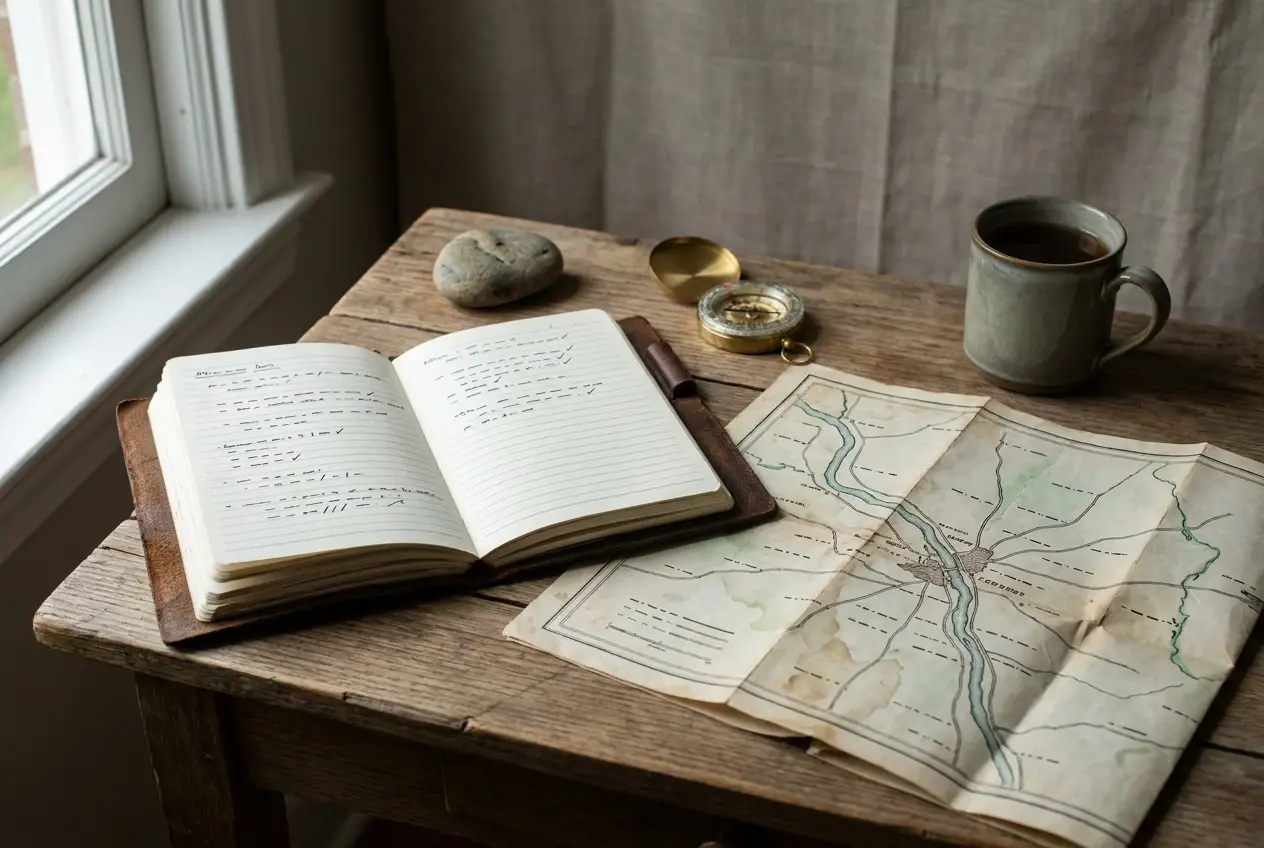
The moment you start planning a trip to Lambertville, one question tends to take over: how many nights do you actually need? It is tempting to book a single night, squeeze in a dinner, and call it a success. But Lambertville sits right next to New Hope, and the two river towns together can easily fill more time than you expect. Pick too short a stay and you will spend your visit rushing instead of wandering.
This guide is built to help you avoid that common regret by matching your trip length to what you actually want to do. You will see exactly what one night gets you, why two nights is the realistic minimum for seeing both river towns without hurrying, and what a third night unlocks for anyone craving an unhurried day in the middle. We will also look at how drive time and arrival overhead change the math, plus a simple framework for choosing. For a place to stay, Chimney Hill Estate describes itself as a bed-and-breakfast-style resort in historic Lambertville on 8.5 acres, with rooms, suites, and event spaces. Pick your nights first, and the rest of the planning falls into place.
Why Trip Length Is the Only Lambertville Decision That Really Matters
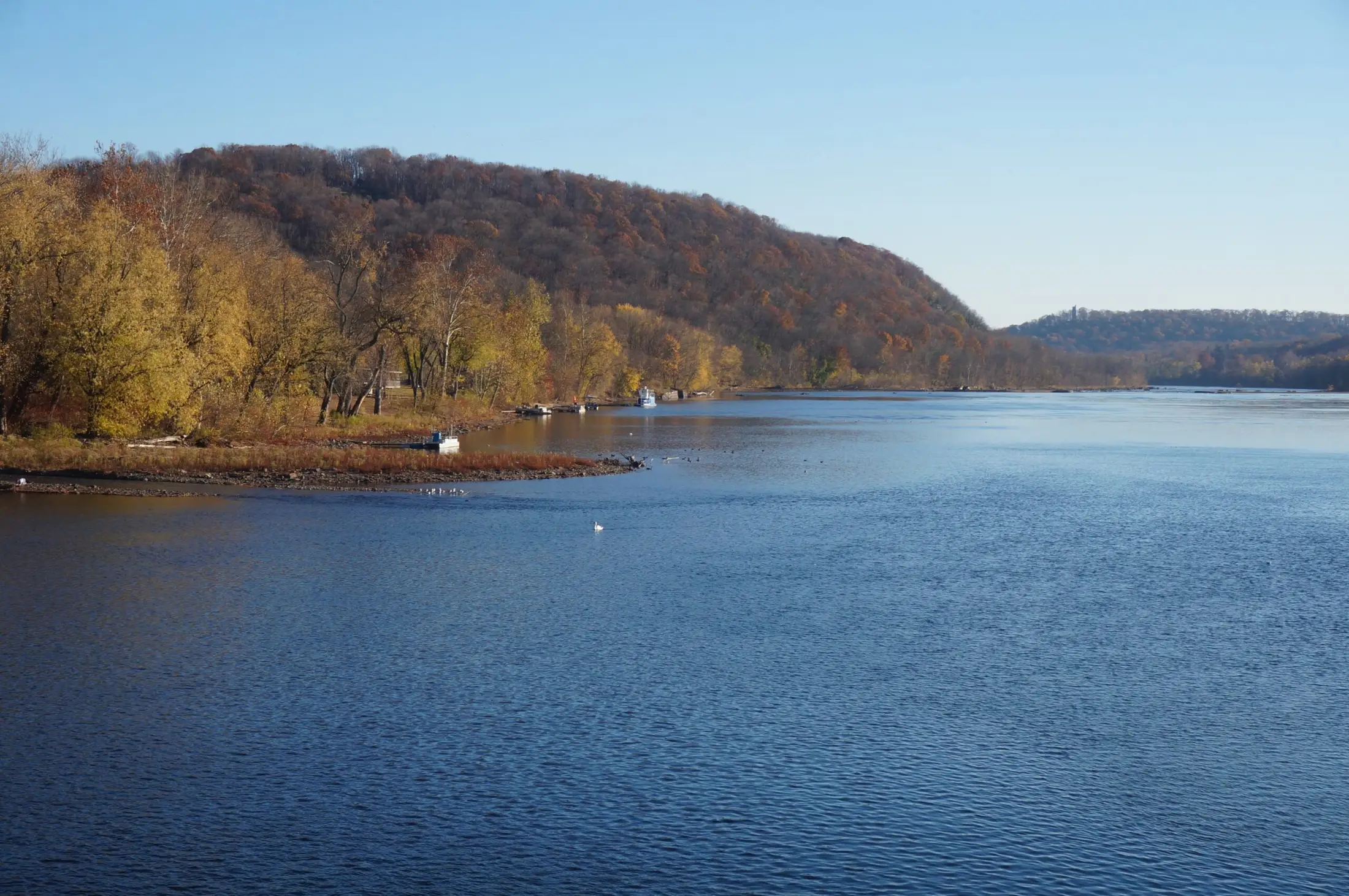
The most common Lambertville regret has nothing to do with a bad restaurant or the wrong hotel. It is under-booking, then spending the whole stay watching the clock. Here is the geography that explains why. Lambertville sits on the New Jersey side of the Delaware River, and New Hope sits directly across the bridge on the Pennsylvania side. The two towns are effectively one walkable destination, not two separate stops.
That is why one night feels different here than it might in a bigger city. You are not choosing between one town and another; you are deciding how much of one shared river corridor you get to see. So treat this as a self-diagnosis. Your trip purpose (a dinner date, a full weekend escape, a slow reset) determines the nights you need, not the other way around.
Here are the three honest options, framed as an editorial guide rather than a research finding:
- One night: a dinner and a breakfast.
- Two nights: the realistic minimum for both river towns.
- Three nights: an unhurried day in the middle that most people never plan for.
State tourism data offers a light sanity check on why a river-town stay is mostly about meals and a place to sleep. New Jersey drew 123.7 million visitors in 2024 with $50.6 billion in spending, and food and beverage plus lodging made up the largest share of that total, according to the state’s 2024 tourism economic impact study. Specifics aside, the pattern holds: you are booking dinners and mornings, not attractions. If you are also weighing a hotel against a historic property, it helps to know what to expect at a Lambertville bed and breakfast before you commit.
Next, let us look at what one night actually gets you.
What One Night in Lambertville Actually Gets You
One night is exactly what it sounds like, and that is the honest place to start. You arrive, you check in, you have dinner, you sleep, you have breakfast, and you leave. That is a genuinely lovely 18 hours or so, but it is a dinner and a breakfast, not a Lambertville visit.
If you are coming off a long drive, arrival overhead eats even that. The first evening becomes dinner and decompression rather than exploring, so the usable hours are smaller than the calendar suggests. Verify your own drive time before booking, since nothing in the research behind this guide supplies Lambertville-specific figures.
That shape suits specific trips well: a local date night, one celebration dinner, a stopover on a longer drive, or a scouting trip to test whether you like the area before committing to more. What it costs you is everything daytime: no browsing either town, no second dinner, no morning in the shops on the opposite side of the river, and a departure that always feels a little early. If that list stings, one night is your answer only if you already know why you are there. If you want a full weekend instead, our two-night itinerary for a romantic Chimney Hill Estate stay shows what that looks like.
The counterweight is real: one night carries the lowest total cost and the least time away from work or home. That is precisely why it is right for some trips and wrong for others.
Two Nights: The Realistic Minimum for Both River Towns
If one night is a taste, two nights are the actual meal. This is a recommendation for a comfortable trip, not a finding from a study, but after mapping how a river-town stay actually unfolds, two nights is the shortest stay that lets you wander Lambertville and cross the bridge to New Hope without hurrying either one.
Here is how it breaks down. Day one is arrival, dinner, and an evening wander. Day two is the full day: one town in the morning, the other in the afternoon or evening. Day three gives you breakfast and a last short loop before you leave.
That second morning matters more than it sounds. Two breakfasts and two evenings mean two chances at the atmosphere of the area, which is where a lot of the pleasure of a river-town trip actually lives. This is two towns, one easy getaway, and the second pass lets it sink in.
Two nights suits couples marking an anniversary or birthday, friends on a short getaway, and anyone who drove a meaningful distance and does not want the trip to be over before it started. It still gives up a little: you likely pick one dinner reservation over another, and you probably do not get a genuinely unstructured day. But nothing important is lost in terms of seeing both towns. If both towns without rushing is the goal, this is the floor. Go below it, and the regret story begins.
Three Nights: For the Unhurried Day in the Middle
If two nights proves you can see both towns, a third night proves you can enjoy them. That is the easiest way to think about it.
The third night does not repeat anything. It adds something one and two nights simply cannot give you: a full day with no arrival and no departure attached to it. No unpacking, no packing, no watching the clock because checkout is looming.
Picture that middle day. You sleep in. You eat breakfast without calculating when you need to leave. You wander back somewhere you liked the first time, or you take the longer river walk you skipped on day two. Maybe you drive somewhere nearby if the weather cooperates. The point is that none of it is scheduled.
Three nights genuinely suits people treating the trip as a reset rather than a checklist. It also fits travelers who hate packing before they have really unpacked, and anyone whose drive makes a shorter stay feel like mostly transit. A slower pace often pairs well with a midweek stay, when the whole point is having room to breathe.
But be honest with yourself. If your goal is one celebratory dinner, a third night adds cost and time without adding much. Book the shorter stay and enjoy it. Next, we will look at how your drive time should shape this decision.
How Drive Time and Arrival Overhead Change the Math
Before you lock in any of these options, account for the variable that quietly changes the math: travel time. A long drive hits a one-night stay hardest, because an evening spent recovering is an evening not spent in Lambertville. That single night mostly goes to the road.
So stop comparing calendar days and start comparing usable hours. Count only the time you will actually be awake, unpacked, and on your feet in town, then run that same count across each stay length. The gap between one and two nights is bigger than the calendar suggests.
Timing matters too. A Friday arrival after work behaves differently from a Thursday arrival with a full day ahead, so treat weekday versus weekend as a real planning factor. Build your plan around two hard edges: check-in and check-out. Arriving well before check-in and leaving right after breakfast both shrink the stay you paid for.
Use a mapping tool to check your own drive time before booking. The sources behind this article contain no Lambertville-specific drive times, so any number you rely on has to come from your own route search.
If your trip lines up with something like Restaurant Week in New Hope and Lambertville, arriving rested matters even more.
A Simple Framework: Match the Nights to the Purpose
So once you have counted your usable hours, the decision gets simpler: what are you actually here for? Here is a map you can scan in seconds.
- One night: a single dinner, a celebration, or a date night.
- Two nights: both river towns without rushing.
- Three nights: an unhurried trip with a real day in the middle.
Ask yourself one sorting question: “Will I be disappointed to leave before seeing the town across the bridge?” If yes, two nights is your floor. Another useful prompt: “Will a long drive make one night feel like mostly transit?” If so, add a night. And “Could one great dinner be enough?” If yes, book one and enjoy it.
A long drive pushes you up a night. A short drive with a narrow goal can justify staying at one. A special-occasion dinner can be plenty on its own. Booking the shorter stay for the right reasons is a valid choice, not a compromise.
For a ready-made middle day, see A Two and a Half Day Plan You Can Copy.
One honesty note before you book: this mapping is a recommendation based on how a river-town trip typically unfolds, not a claim backed by length-of-stay data for Lambertville, because that data does not exist in the sources.
Where to Stay Once You Have Picked Your Nights
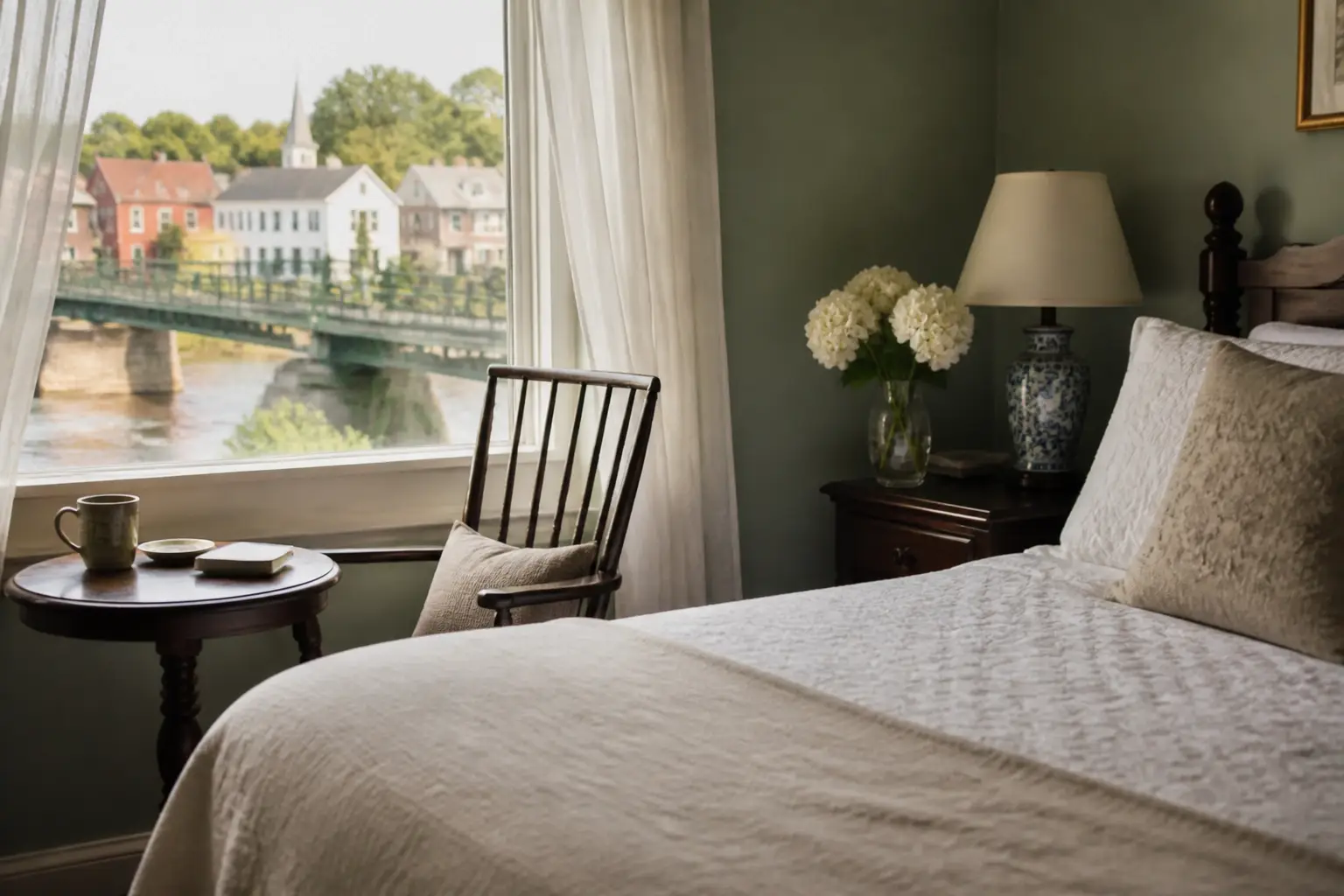
Once you’ve picked your number, the next question is where. If you land on two or three nights, Chimney Hill Estate is one option to look at. By the property’s own description, it’s a bed-and-breakfast-style resort on 8.5 acres in historic Lambertville, with rooms, suites, and event spaces.
Owners Marek Wonka and Sylvester Kolakowski took over in 2021 and, by the inn’s own account, have been restoring the historic property. That’s the property’s story about itself, not an independent finding.
Here’s why the type of place fits the trip lengths above: a small property with grounds is naturally suited to the slow morning and unhurried middle day that two and three nights are built around. That’s a logical match, not a claim about specific amenities.
Before you book, confirm the details directly with the property. Availability, room types, rates, stay policies, and any event space needs aren’t established in the sources behind this guide, so check with the inn rather than assuming.
If you want a sense of how an overnight changes the experience compared with a day trip, Why Staying at Chimney Hill Beats a Fall Foliage Day Trip makes that case.
Pick Your Nights First, Then Everything Else Falls In Line
The property choice is settled, so let’s bring it back to the decision that shapes everything else. Match your stay length to the purpose of your trip, and the Lambertville regret problem mostly disappears.
Here’s the rule to carry out the door:
- One night: dinner and a breakfast
- Two nights: the realistic minimum for both river towns
- Three nights: room for the unhurried day in the middle
Apply two adjustments to that baseline. First, how far you’re driving: a long haul pushes you up a night, since transit eats the shortest stays alive. Second, your goal: a single celebration can justify one night, while a genuine reset wants three. For help weighing drive times from the city, see why Lambertville is the perfect weekend getaway from NYC or Philly.
Then act: decide your purpose, verify your drive time with a current map, book the stay length that fits, and confirm property details directly with the inn you choose.
Conclusion
Trip length is the decision that governs everything else. One night buys you dinner and a breakfast, two nights is the realistic minimum for both river towns, and three nights leaves room for the unhurried day in the middle. Drive time and purpose are the two adjustments that move that baseline up or down.
Settle your nights first, then let the property, the reservations, and the itinerary follow. That order is what makes the Lambertville regret problem mostly disappear.
Your next step is simple: name the purpose of the trip, verify your drive time with a current map, and book the stay length that matches. When you are ready to choose where to sleep, Chimney Hill Estate is the property this guide points to for however many nights you land on.
Pick your nights with confidence, and the rest of the trip falls in line.