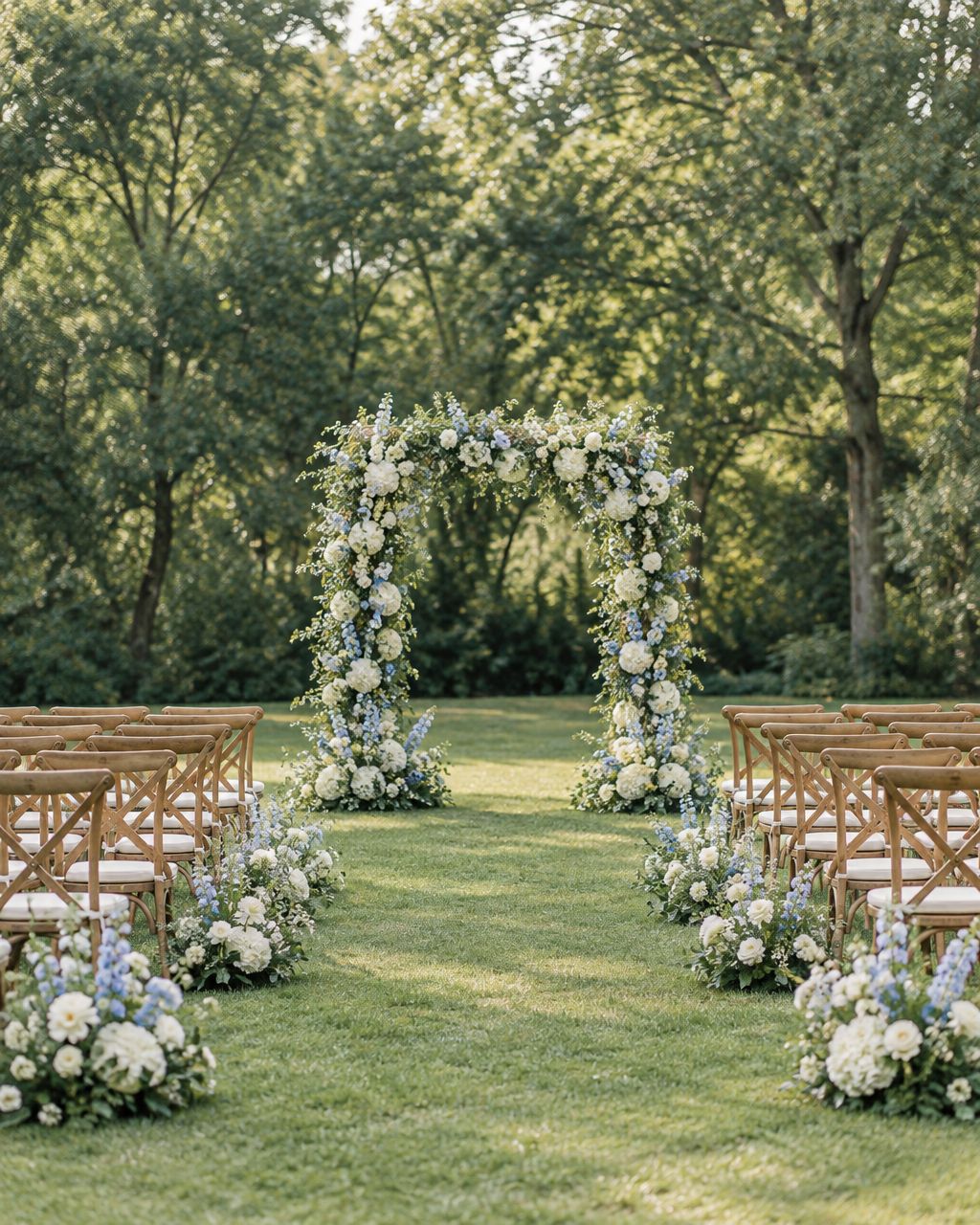

Let’s be honest: most wedding venues would rather send you a brochure than talk numbers. You fill out a contact form, wait three days, sit through a tour, and only then does someone quietly slide a pricing sheet across the table. By that point, you’ve already fallen in love with the place. Sound familiar?
If you’ve been searching for real information about wedding venue costs, you’re not alone. It’s one of the most Googled and least-answered questions in wedding planning. And when the venue in question is a historic 8.5-acre estate with on-site lodging, manicured grounds, and a bed-and-breakfast charm, the curiosity (and the anxiety) only grows.
This guide is different. We’re breaking down exactly what couples pay to get married at Chimney Hill Estate in Lambertville, NJ, what’s included, what costs extra, and how it all stacks up against other boutique venues in the region. Whether you’re just starting your search or narrowing down your final choices, by the end of this post you’ll have a clear, honest picture of what to expect and why.
Why Wedding Venue Pricing Feels So Confusing
Most wedding venues answer “how much does this cost?” with two words: contact us. That wall of silence costs couples something real: time, confidence, and often the willingness to reach out at all.
Wedding venue costs stack in layers: a venue or estate fee, per-person catering, lodging, and optional add-ons. Couples unfamiliar with this structure routinely miscalculate in both directions, assuming a venue is out of reach or underestimating what they’ll actually spend. The national average wedding cost hit $36,000 in 2025, up $3,000 from the prior year, meaning even recent planning advice can already be outdated.
Pricing anxiety is one of the most common reasons couples delay contacting a venue that fits their vision. That hesitation is avoidable.
This guide breaks down exactly how Chimney Hill Estate’s pricing is structured, what each layer covers, and how the total compares to the broader NJ boutique-venue market. Couples who understand what they’re paying for arrive to consultations prepared and confident, not guarded. Why a private estate keeps planning simple becomes clear once the numbers are in plain view.
What You’re Actually Paying For: The Chimney Hill Estate Experience
So what exactly are you buying when you book Chimney Hill Estate?
Start with the property itself. Across Chimney Hill’s 8.5 acres, the estate operates as a working bed-and-breakfast-style resort year-round. This is not a rental hall that unlocks for four hours and goes dark. The estate includes 8 main house rooms and 7 barn suites, so your closest family and friends can sleep on-site, making the whole weekend feel like a genuine destination experience rather than a single event. Using Chimney Hill Estate as your base for a full wedding weekend is part of what separates this property from a standard venue rental.
Since 2021, owners Marek Wonka and Sylvester Kolakowski have led a hands-on restoration of the estate, reviving its historic character room by room and across the grounds. That investment shows up directly in the guest experience.
Multiple event spaces across the property handle ceremonies, cocktail hours, and receptions at different guest counts, giving couples flexibility that a single-ballroom venue simply cannot offer.
Pricing here reflects all of that. You are not paying per hour; you are investing in a bundled experience where setting, hospitality, and event infrastructure come together in one package.
Cost Layer 1: The Venue or Estate Fee
The estate fee is a flat charge securing your use of the property and event spaces for the wedding day, completely separate from per-person catering costs.
The tier depends on guest count and which spaces you need. Intimate weddings of roughly 50 guests or under use the carriage house and surrounding grounds; larger events requiring the full property and tent structure carry a higher fee. Smaller celebrations benefit from a genuine lower entry point with no inflated minimum headcount forcing you to invite 120 people to justify the cost.
What the estate fee typically covers: access to ceremony and reception spaces, setup and breakdown windows, on-site coordination support, and use of the grounds for photography. If you’ve been wondering how to extend the evening with an overnight stay for your closest guests, that’s a separate lodging conversation covered later in this guide.
For current 2026 figures, request the pricing guide directly from Chimney Hill. The exact fee tier for your date, guest count, and reserved spaces will come from that conversation, not a static number online.
Cost Layer 2: Per-Person Catering and What It Includes
Once the estate fee is settled, the next cost that scales with your wedding is per-person catering: food service, typically a plated or buffet dinner, multiplied by your confirmed guest count.
At boutique historic estate venues in NJ, per-person pricing reflects real costs: skilled kitchen staff, quality ingredients, and infrastructure built for intimate hospitality rather than high-volume throughput. That’s a meaningfully different product than a catering-hall assembly line.
The math matters. At 75 guests, even a mid-range per-head rate makes catering a substantial line item. Before comparing venues on estate fee alone, start with purpose, guest list, and budget so you’re doing total-spend comparisons, not just headline-fee comparisons.
At Chimney Hill, catering is integrated into the estate experience rather than outsourced to an off-site operator. Food is part of the hospitality, not a logistical afterthought.
When you request pricing, ask specifically what the per-person rate covers: appetizers, dinner courses, non-alcoholic beverages, staffing, and cake-cutting service. These inclusions vary widely by venue and are one of the most common sources of surprise charges on final invoices.
The Alcohol Policy: What Couples Need to Know
Beyond catering, one more cost layer catches couples off guard: the bar.
New Jersey law prohibits Chimney Hill Estate from selling or transporting alcohol directly. This is not a Chimney Hill-specific policy; it is a statewide licensing requirement under NJ liquor regulations that applies to any property without a retail liquor license. Couples purchase their own bar selections and arrange delivery to the estate.
That arrangement is a financial advantage. Venues with full liquor licenses typically mark up alcohol 30 to 50 percent above retail. Purchasing directly keeps that margin and gives you control over exactly what is served, whether a full open bar, curated wine and beer, or a signature cocktail setup.
Chimney Hill’s team provides guidance on quantities, helps coordinate delivery logistics, and can point you toward local distributors. If you want low-key inspiration while planning, Chimney Hill Estate’s guide to winter drinks and desserts in New Hope is a useful way to explore the region’s flavor profile before finalizing your selections.
For budgeting purposes, add a separate bar line item estimated at $25 to $75 per person — roughly $1,900 to $5,600 for a 75-guest wedding — a figure worth knowing before you finalize your overall numbers.
Cost Layer 3: On-Site Lodging and the Destination Wedding Math
Beyond bar costs, on-site lodging is the pricing layer couples most often overlook until they’re deep into planning.
Chimney Hill’s on-site rooms — 8 main house rooms and 7 barn suites — mean you may not need an external hotel room block at all. Outside room blocks add logistics, minimum-night commitments, and per-room costs that rarely get budgeted upfront. Having 15 rooms on-site keeps your wedding party and closest family steps away, not a 15-minute drive.
The destination wedding math works like this: for guests who would otherwise book nearby hotels in Lambertville or New Hope, the “cost” of on-site lodging is largely offset by what they’d have spent independently. You can see how the rooms are laid out in this overview of rooms and sleeping arrangements for a girls’ group, which gives a clear sense of the space.
For couples planning a Friday-Sunday wedding weekend, ask Chimney Hill specifically about package rates that bundle venue access with room bookings. That multi-day framework transforms the event from a single evening rental into a full destination experience, and it’s where the estate model delivers its strongest value.
Hidden Costs at Other Venues That Chimney Hill Addresses Directly
Beyond lodging, there’s another layer of the budget conversation that catches couples off guard: line items that never appear in a headline fee but show up in the contract.
Cake-cutting fees, setup and breakdown charges, and outside vendor restrictions are among the most common sources of sticker shock in NJ wedding venue contracts. Ask every venue you’re considering to itemize these explicitly before you fall in love with the space.
At Chimney Hill, one firm parameter worth knowing upfront is the five-hour event window, with non-lodging guests off-property by 10 pm per Chimney Hill’s event policy. That is not a hidden overtime trap; it’s a defined boundary. Knowing it now means you build your timeline confidently, rather than discovering it at a walkthrough after you’ve already pictured your grand exit at midnight.
Outside vendor flexibility is another point to pin down early. Confirm whether you can bring in your own photographer, florist, and band, or whether the venue requires a preferred vendor list that carries additional access fees.
Setup and breakdown access windows matter too. Ask whether your venue fee includes enough time for vendors to work without rushing, since a tight window can translate to overtime labor costs on your end.
Boutique estates tend to surface these details upfront. Larger event spaces often don’t.
How Chimney Hill Compares to Small Wedding Venues in NJ
Once you’ve reviewed the fine print at any venue, the next question is: how does the overall picture actually compare?
Small wedding venues in NJ price their events in fundamentally different ways. Some charge a flat site fee with catering billed separately. Others advertise all-inclusive packages, but “all-inclusive” doesn’t always mean what it sounds like — a venue listing 15+ bundled services does not automatically include catering, so always confirm what the headline package covers. NJ reception venues typically charge $125 to $250+ per person, and site fees for Saturday events at boutique properties in 2026 range from roughly $8,900 to $11,700 or more (e.g., Eagle Lake Estate’s 2026 Saturday fees) before catering enters the equation.
Always calculate total spend at your expected guest count before comparing venues side by side.
The more useful question isn’t “which venue is cheaper” but “what does my total spend actually buy me?” That combination — setting, lodging, and coordination under one roof — is the value proposition in plain numbers. For couples prioritizing setting, intimacy, and a true destination-style experience, that math favors Chimney Hill clearly.
What a Real Wedding Budget Might Look Like at Chimney Hill
So what does this actually look like in dollars?
For an intimate 50-guest wedding, think: a lower-tier estate fee covering ceremony and reception space, per-person catering at a mid-range rate, and a room block using some of Chimney Hill’s 15 on-site rooms for the wedding party. That combination typically lands at a total venue-side investment competitive with, or below, comparably positioned NJ boutique venues.
For a 100-125 guest wedding using the full property and tent structure, the fee tier is higher, lodging spills into nearby Lambertville and New Hope, and the overall investment grows accordingly.
The clearest budgeting framework: split your costs into four buckets: venue/estate fee, per-person catering, lodging, and bar. Then contact Chimney Hill directly to fill in current 2026 figures for each.
The most common mistake couples make is comparing only venue fees across properties, without checking what each fee actually includes. A lower headline number rarely means a lower total bill.
Chimney Hill’s team offers personalized cost estimates at no charge. Arriving with a firm guest count and a realistic budget range makes that conversation significantly more productive.
Wedding Venue Packages: The Right Questions to Ask Before You Book
Once you’ve worked through the budget math, bring this checklist to every venue conversation you have.
Ask for a full written itemization of what the venue fee includes and what it doesn’t. A confident venue hands this over immediately. Hesitation is a signal.
Confirm the exact event window including start time, end time, and the overtime policy. At Chimney Hill, the five-hour window with a 10 pm off-property requirement per Chimney Hill’s event policy is a firm, known parameter. Build your timeline around the actual hours, not assumptions.
Ask about seasonal pricing. Spring, summer, and fall Saturdays carry premium rates at most NJ venues. The same property on a Friday or in January may offer meaningful savings with identical spaces and service.
Understand the catering model. Is an in-house caterer required? Is there an approved vendor list? Or is the venue fully open? Each structure carries different cost and flexibility implications that affect your total spend.
For historic estate wedding venues specifically, ask whether the event contract includes a minimum room-night commitment. Some properties require a set number of on-site rooms to be booked as part of the event agreement. Knowing this upfront prevents surprises during contract review.
The Bottom Line on Chimney Hill Estate Wedding Costs
Once you’ve worked through the right questions to ask, the bigger picture comes into focus quickly.
As outlined above, those four layers each carry a distinct, knowable price. That combination — setting, lodging, and coordination under one roof — is the value proposition in plain numbers.
Couples who arrive at a consultation knowing their guest count, their approximate budget range, and how pricing layers work leave that conversation with a real plan. Couples who arrive uncertain leave with more questions.
The simplest next step is requesting Chimney Hill’s current 2026 pricing guide. It costs nothing, and it replaces the guesswork that makes pricing anxiety feel bigger than it is.
Transparency is not a tagline at Chimney Hill. It is how Marek Wonka and Sylvester Kolakowski have run the estate since taking ownership in 2021. That starts with giving you the actual numbers you need to decide with confidence.
Conclusion
Wedding venue pricing does not have to feel like solving a puzzle with missing pieces. At Chimney Hill Estate, the costs are clear, the layers are logical, and the value behind every dollar is tangible.
The four-layer framework in this guide gives you everything you need to arrive at that conversation prepared.
Couples who approach their venue search with this framework make faster, more confident decisions. They also avoid the budget surprises that derail timelines and add stress to what should be an exciting process.
Request Chimney Hill’s 2026 pricing guide today. Real numbers, real clarity, and a real conversation about what your wedding could look like on one of New Jersey’s most beautiful properties.