If you have ever booked a room at a country inn and then felt a flicker of panic about the arrival, you are not alone. The booking page promises charm and quiet, but it skips the part where you picture yourself standing in a gravel driveway at dusk with a suitcase, wondering where the front desk went. Many first-time guests hesitate because the logistics are a mystery: where do I park, who hands me a key, and what happens if my train runs late? This post removes that friction by walking you through the entire arrival sequence from booking confirmation to room key. We will look at the arrival window when a host is there to greet you, where to park and how to find the entrance, the key handoff, and the simple call that fixes a late arrival. You will also learn how after-hours access works if you roll in at midnight, how to handle an early departure without a desk, what New Jersey rules say about stay disruptions, and why knowing this sequence often changes the booking decision. Chimney Hill Estate, an 8.5-acre bed-and-breakfast-style resort in historic Lambertville, New Jersey, owned by Marek Wonka and Sylvester Kolakowski since 2021, is a useful reference point for how these properties operate. By the end, the unknowns that once felt like a leap of faith will read like a simple checklist.
Why an Inn With No Front Desk Feels Like a Leap of Faith
If you have only ever checked into a hotel, you know the script: lit lobby, desk, someone hands you a key card. A bed-and-breakfast style inn swaps that script for a conversation, and nobody gives you the new lines in advance. That is the real anxiety.
The gap is not a missing system. Booking platforms list a room type, rate, and cancellation window; they were never built to carry arrival logistics. The unknown comes from how inventory gets listed.
This article walks the sequence in order, from booking confirmation to room key, so nothing is left to guess. The scene-setting facts above give the texture of the place, not the arrival rules. For room options, see our room and suite guide.
An inn with no front desk is not a hotel with something missing. It is a different arrival model, and once you know the steps, it is often faster and warmer than a lobby queue.
Before You Arrive: What Your Confirmation Sets Up
Think of your booking confirmation as the opening line of the arrival conversation, not just a receipt. Read it with four questions in hand: What is the arrival window? Where on the property should I go? How do I reach the host if plans change? Does this room or suite have any access detail I should know? When you book direct, you can ask those questions and reply to a person who knows the room, rather than relaying them through a platform.
Then do three things before you travel. Save the property phone number. Note the arrival window somewhere you can see offline. If you expect to run late, say so early, not at 11 p.m. from the road.
Also raise anything that changes the arrival: after-dark arrival, extra luggage, a pet, or accessible parking. Tell us and we will tell you how it works. If your dates overlap New Hope and Lambertville Restaurant Week, confirm your arrival window before booking dinner.
The Arrival Window: When Someone Is There to Meet You
The next detail to pin down is your arrival window: the span of hours when the inn is staffed and expecting you. That is a different idea from a 24-hour hotel front desk, and the difference is the benefit. Chimney Hill will tell you exactly when to expect someone, who will greet you, and what to have ready when you arrive, so the handoff is a conversation rather than a guessing game. Because a host is waiting, your timing matters. Send a quick note if your drive takes longer than planned, and the inn can plan around you. Inside the window, you have nothing to figure out. You are not hunting for a kiosk or trying random doors. You are meeting the person who knows the property and your room. That is why a defined window is not a limitation. Once you are settled, use it to shape a realistic evening timeline for dinner or a walk in Lambertville.
Where to Park and How to Find the Entrance
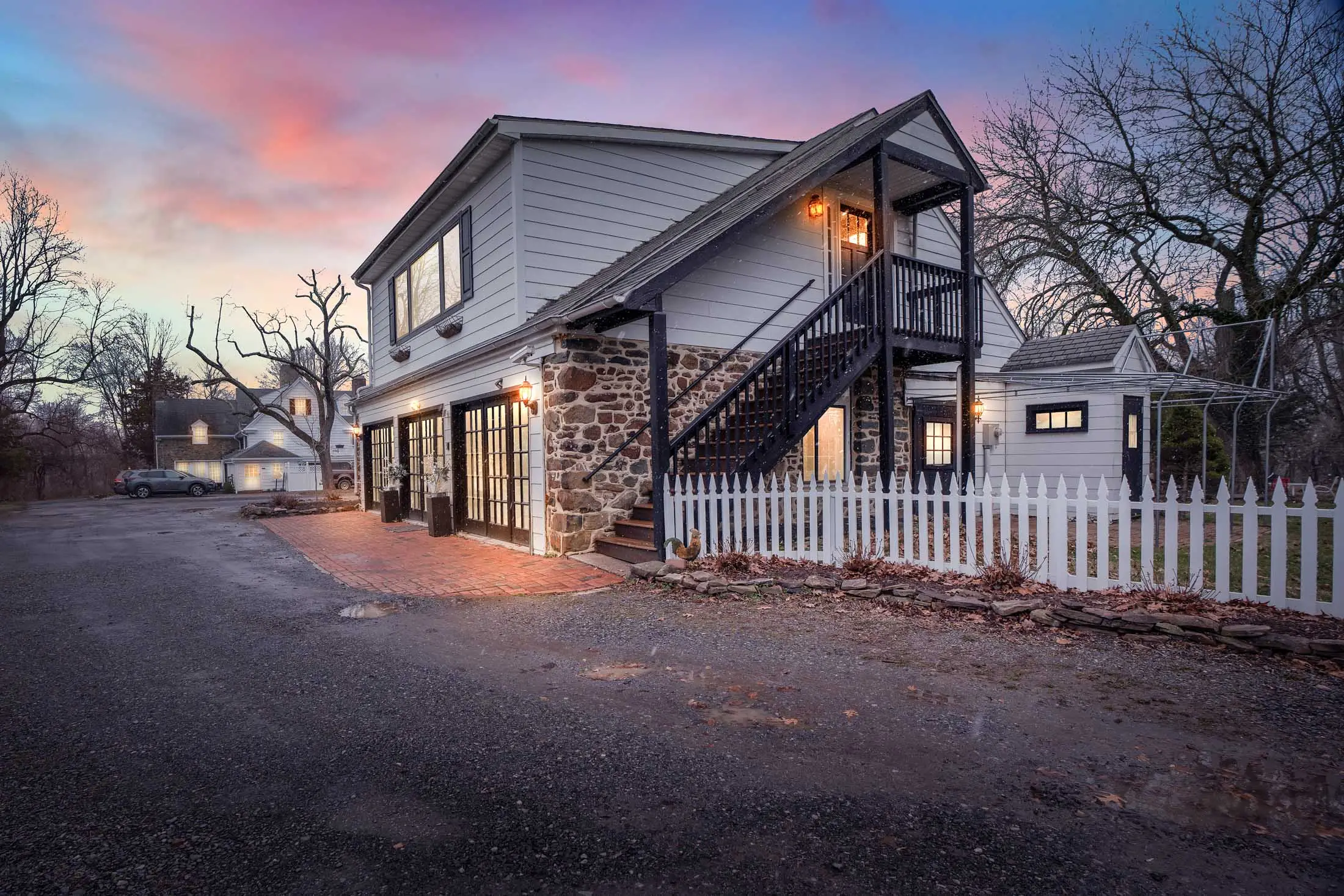
Knowing when someone is there is half the battle. The other half is knowing where to go once you turn off the road. Parking is the detail first-time inn guests ask about most, usually on arrival day. At Chimney Hill Estate, set in historic Lambertville, New Jersey, do not guess or assume street parking, lot locations, or permit rules. When you book direct, ask where to pull in, whether to park before checking in, and how the 8.5-acre grounds are laid out across guest rooms, suites, and event spaces. After-dark arrivals just lean on the same pre-travel prep from above. For a broader sense of how an estate inn differs from a hotel, see our guide to a Lambertville bed and breakfast versus a hotel. Then we will walk through the greeting and key handoff.
The Host Greeting and the Key Handoff
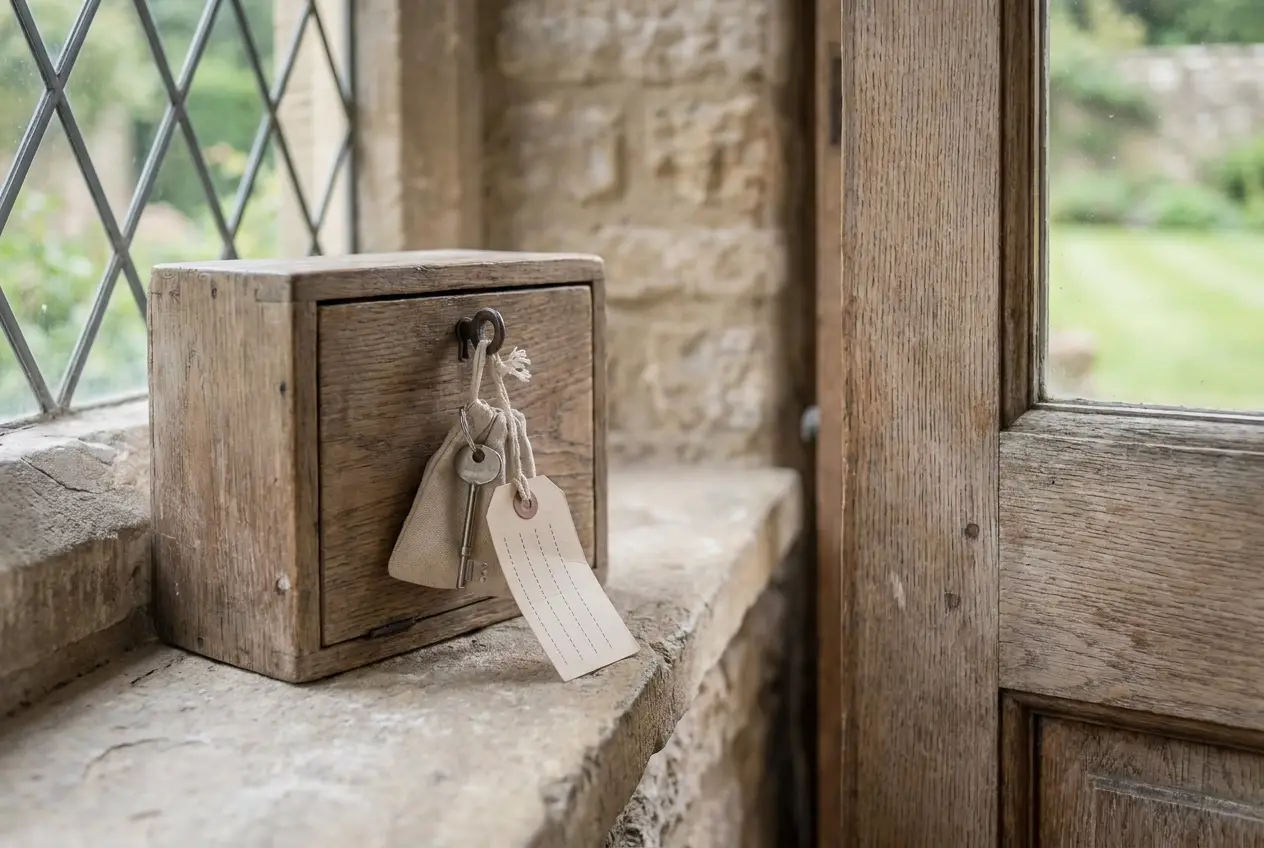
Once you’re parked and oriented, the host greeting is where the arrival model earns its keep. Instead of a key card through a glass slot, you get a person who knows which room you booked, can answer questions about Lambertville, and points out the grounds. Chimney Hill’s hands-on ownership style makes that personal welcome plausible, though it does not guarantee a specific routine.
Ask your host to explain the key handoff plainly: a physical key, an access code, or a walk to your door. Confirm which it is, what to do with it at checkout, and how to get back in if you return late. Before you leave the greeting, also ask for the after-hours contact method, breakfast timing if offered, and checkout expectations. That leaves you self-sufficient. Planning a fall stay? Why Staying at Chimney Hill Beats a Fall Foliage Day Trip explains the overnight case.
Running Late: The One Call That Fixes Everything
If the road runs longer than planned, take a breath. Late arrivals are routine at a staffed inn, and one call ahead usually resolves the whole thing.
- Call as soon as you know you are delayed, using the property number you saved before traveling. Call before you are too far past the arrival window for anyone to reach you.
- Follow the host’s instruction for that night. They know the building, the room, and what can be arranged.
- Treat timing as more important than the length of the delay. A host who knows you are two hours out can plan around you. A host who learns at midnight has fewer options, and you absorb the inconvenience.
That one conversation can also cover a late dinner recommendation, whether your late arrival changes anything about the room, and what to do if the delay stretches past the staffed window. Ask the host to confirm any late-arrival procedure in writing, then follow it exactly. If your timing slides past the staffed window, that is the moment to ask what the plan is for the night, not after you arrive.
After-Hours Access: What Happens If You Arrive at Midnight
If late becomes midnight, the question changes. After-hours access is the arrangement that lets a confirmed guest get into their room when no one is at the greeting point. First-time inn guests often assume it does not exist; at Chimney Hill, do not assume it does. No self-service access method is published, so the safe plan is the staffed arrival window and a direct conversation before you leave. Ask whether you will meet a person or use an access method; that answer determines how you plan the drive. If midnight is possible, save the inn’s number before departure, confirm the plan by phone or email, and ask who to contact if the arrangement fails. A full car, tired passengers, and a dead cell signal are exactly why you handle this in advance, not from the road.
Early Departures and Checkout Without a Desk
Early checkout is the mirror image of a late arrival: at a staffed inn, it is a conversation, not a queue at a desk. Ask the night before how the mechanics work. Does your key or access code get returned, left in the room, or simply expire? If you are leaving before breakfast, ask whether the timing affects the morning service and whether a to-go option is possible. Then confirm four things: the checkout time, what to do with the key, where to leave anything the inn lent you, and whether breakfast can travel. Early starts are routine for guests catching flights or heading into a day around Lambertville, and a quick word in advance is usually all the coordination required. At Chimney Hill, ask these questions when you book or the evening before, so your departure is as easy as your welcome.
What New Jersey Says About Stay Disruptions
Early departures are one kind of plan change. Another is a disruption to the stay itself, and New Jersey has a consumer-rights rule worth knowing. Under N.J.S. 29 Section 4-14, as published on FindLaw and current as of January 1, 2024, a hotel operator must notify guests of a service disruption within 24 hours across every booking channel, with an “as soon as practicable” fallback when timely notice is not feasible. The same statute says a guest may cancel before check-in without a fee or deposit kept if the stay is or could be substantially affected. After check-in, the guest may terminate and the operator may not keep the deposit for the unused portion. That is why confirming your arrival logistics in writing beats assuming them. One caveat: the published extract does not confirm whether a bed-and-breakfast style property like Chimney Hill falls under the statute’s “hotel operator” definition, so do not read this as Chimney Hill’s obligation. Whatever the legal threshold, knowing your arrival window, access method, and who to call before you travel is what keeps your own trip from being disrupted. For an example of clear, upfront details, see Chimney Hill’s transparent wedding pricing guide.
Questions First-Time Inn Guests Ask
Does an inn have a check-in time like a hotel?
Yes: an arrival window, hours when someone is there to greet you. Confirm the property’s stated window before booking; it shapes your travel day more than a 24-hour hotel desk.
What happens if I arrive later than expected?
Call as soon as you know you’re delayed, not once parked. The property’s late-arrival procedure is the authority; ask that night’s plan, not general inn practice.
Can I get into my room if I arrive after hours?
Only if the property has confirmed an arrangement. Before travel, ask whether you’ll be met by a person or given another access plan; save the number to call if it fails.
Where do I park, and how do I find the right building?
Ask when booking. On 8.5 acres, entrance and parking details matter; your confirmation or a quick call is where they belong.
Do I need to tell you anything before I travel?
Yes, briefly: expected arrival time, after-dark arrival, pets, accessibility needs, anything unusual. A few minutes of notice prevents a lot of improvising.
Can I leave early or check out without visiting a desk?
Ask the night before: checkout time, key handling, whether an early start is workable. Planning a celebration here? The same step-by-step clarity applies when you book a wedding venue at Chimney Hill Estate.
Why Knowing the Arrival Sequence Changes the Booking Decision
So now that you know what to ask, here is why asking early is worth it. Arrival logistics are the part of a stay you cannot see before you commit. A property that explains them up front removes a real reason to hesitate, and that is simple hospitality reasoning, not a promise about booking rates.
Those details live with the inn, not a platform listing. Your confirmation covers the room, the rate, and the cancellation terms. The arrival conversation is where booking direct pays off, because you can ask questions and get answers from a person who knows the property.
Before you travel:
- Confirm your arrival window and save the property number.
- Flag a late or after-dark arrival as soon as you know, not when you pull in.
- Ask about parking, access, and an early departure when you book.
When you book direct at Chimney Hill Estate, send those arrival questions in advance. The same hands-on welcome that greets you on the property starts with the reply.
Conclusion
Arrival at a country inn without a front desk comes down to a few simple habits. They are the same three habits above. Together, these steps turn a leap of faith into a sequence you can picture before you ever leave home.
That is the value here: knowing the arrival sequence before you commit, rather than discovering it at the door.
Your next step is to book direct at Chimney Hill Estate and send those arrival questions in advance. The same hands-on welcome that greets you on the property starts with the reply. Ask early, arrive easy.